Dear Esteemed Colleagues
For some decades, Psychology has become more inclusive of justice-centered perspectives such as decolonial and critical theory paradigms besides fostering the traditional indigenous and positivist approaches. National Academy of Psychology (NAoP) India welcomes researchers, teachers and practitioners in India to embrace multi-paradigmatic research approaches – qualitative, quantitative, and a combination of these – that are culturally situated and social justice-oriented. In this regard, the decolonial paradigm has a meaningful contribution to make in the Global South (erstwhile colonized nations located to the south of the colonizers) nations that have been adversely affected by the neoliberal economic policies that provide tax-waivers to the multi-national companies at the cost of reduction in the social service sector (health, mental health, education, elderly care etc.). Resultantly, well-being and mental health of the minoritized groups (facing the brunt of social hierarchies of class, race, ethnicity, religion, gender etc.) are often constrained. How Global South as a set of nations may address these issues of well-being and mental health in the neoliberal era can be a major area of study of cultures and communities. Researchers in Psychology may endorse and contribute to the ways justice-based healing may be fostered in such settings in the neoliberal times.
I invite you to explore, engage, and contribute to our shared vision of strengthening psychology’s role in promoting individual and societal wellbeing.
Dr. Kumar Ravi Priya
(Professor)
President, National Academy of Psychology (NAOP), India


Members get access to the journal Psychological Studies, membership database, and other members-only resources
Our memberships are billed annually.
Members get access to the journal Psychological Studies, membership database, and other members-only resources
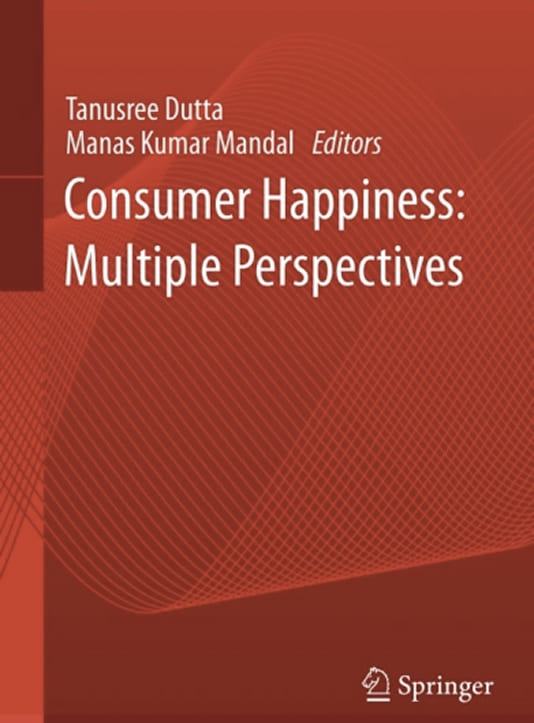
CONSUMER HAPPINESS: Multiple Perspectives
NAOP fellow, Manas Kumar Mandal along with Tanusree Dutta edited a volume on consumer happiness; aggregating a variety of perspectives on this important topic.
We are ‘BUYING’ our way to happiness. If we are buying our way to happiness, then it is important to identify the factors of happiness. Does happiness of a consumer reside in product disposability, i.e. being able to buy a product, use it and dispose it without liability or is it durability. Is a consumer happy because of the product experience or product quality? Do advertisements have to address the consumers mind or mindset to generate positive experience? Are consumers happy with product information (cognitive) or product experience (emotion)? Searching an answer for such and other questions in the quest to consumer happiness forms the content of this book.1 View on SpringerLink.com
Members get access to the journal Psychological Studies, membership database, and other members-only resources
Ajit Mohanty
Written by NAOP fellow, Professor Ajit Mohanty, this book is a multidisciplinary analysis of the meaning and dynamics of multilingualism from the perspectives of multilingual communities in the margins. Its comparative analysis of language-in-education policies and applications of multilingual education in diverse contexts shows some promises and challenges in the education of minority children.

Members get access to the journal Psychological Studies, membership database, and other members-only resources
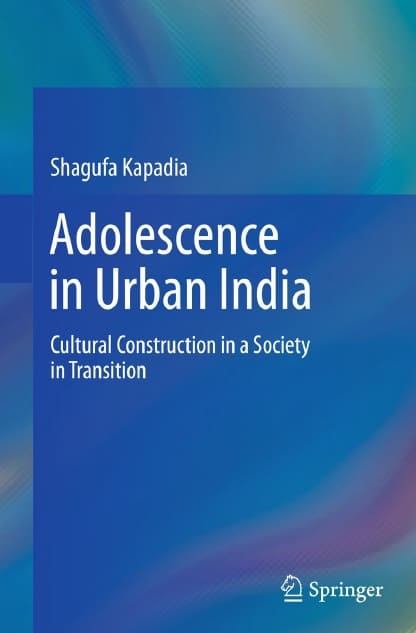
Shagufa Kapadia
Senior NAOP member, Shagufa Kapadia offers a culturally and contextually grounded understanding of adolescence in urban India. It presents indigenous frameworks of parenting adolescents and the parent-adolescent relationship, derived
from the perspectives of both adolescents and parents. The book illustrates the nature and process of parent-adolescent disagreements in the changing Indian society.
View on :
Springerlink.com